2026 is HERE and we have the top trends and must-haves that you don’t want to miss.
The era of all grey and marble is over, and we are now moving towards warmer, neutral tones, dark and light woods, textured stone and coloured brassware and fixtures.
In our guide below we will help you make the right choice for your bathroom and give you and an insight into some considerations to make whilst designing your dream space.
Design Considerations
Large Format Tiles
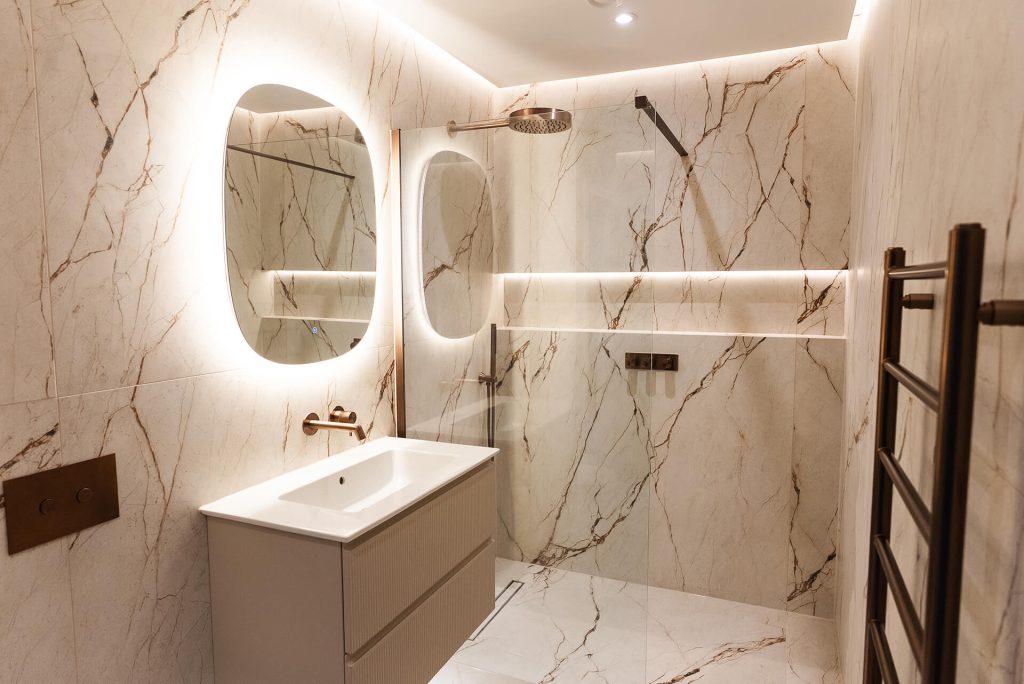
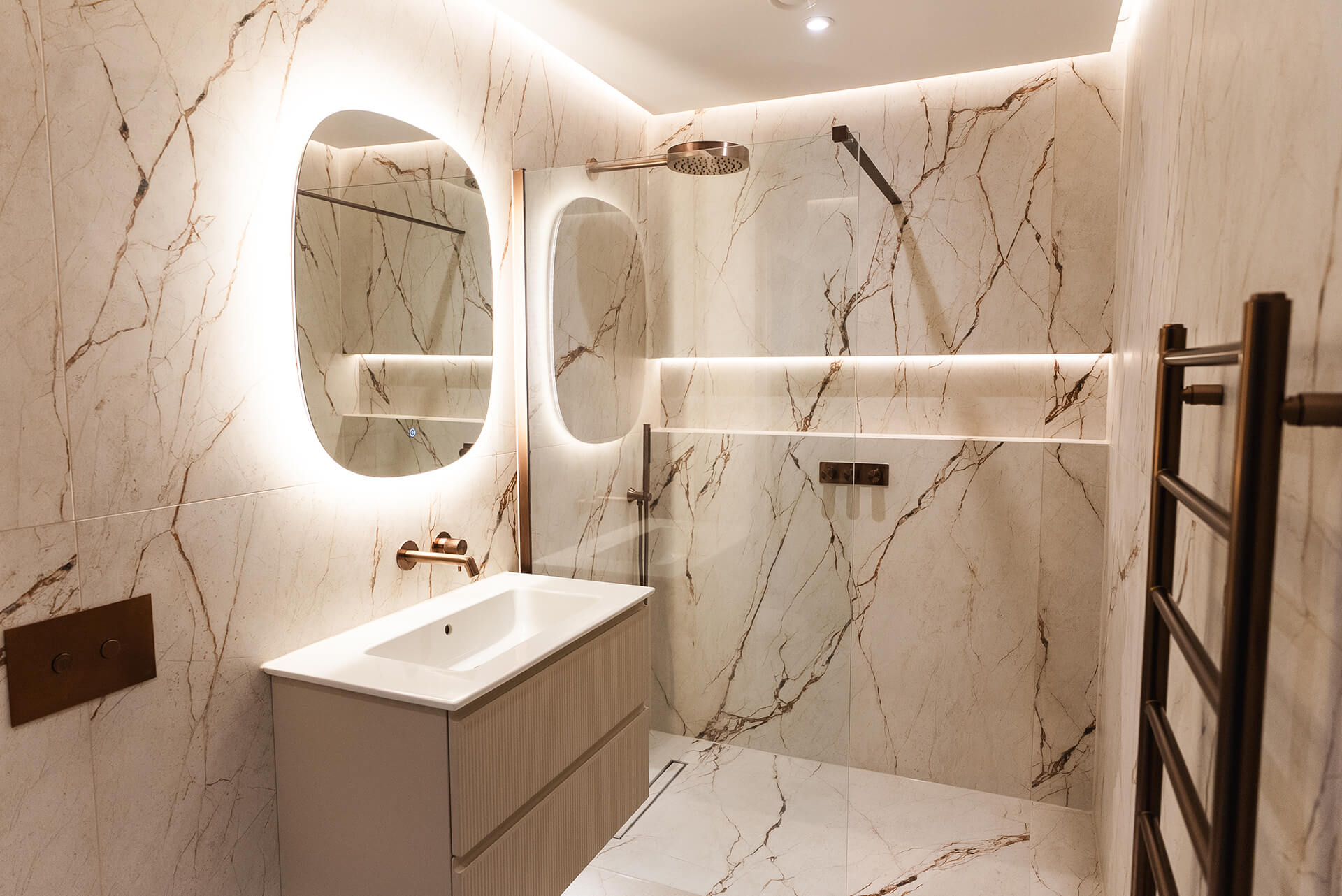
- Fewer grout lines are one of the key advantages of large format tiles. With less visual interruption, walls and floors appear more seamless and spacious—an especially effective solution for smaller bathrooms. Reduced grout also means easier maintenance and improved hygiene, a growing priority in modern homes.
- Versatility in design makes large format tiles suitable for both minimalist and luxury bathrooms. Available in finishes that replicate natural stone, marble, concrete, and even metal, they deliver high-end aesthetics with the durability and water resistance of porcelain.
- Precision installation is essential. Large format tiles require expert handling, careful substrate preparation, and often pair beautifully with mitred edges for a refined, continuous finish—further reinforcing the importance of skilled installation.
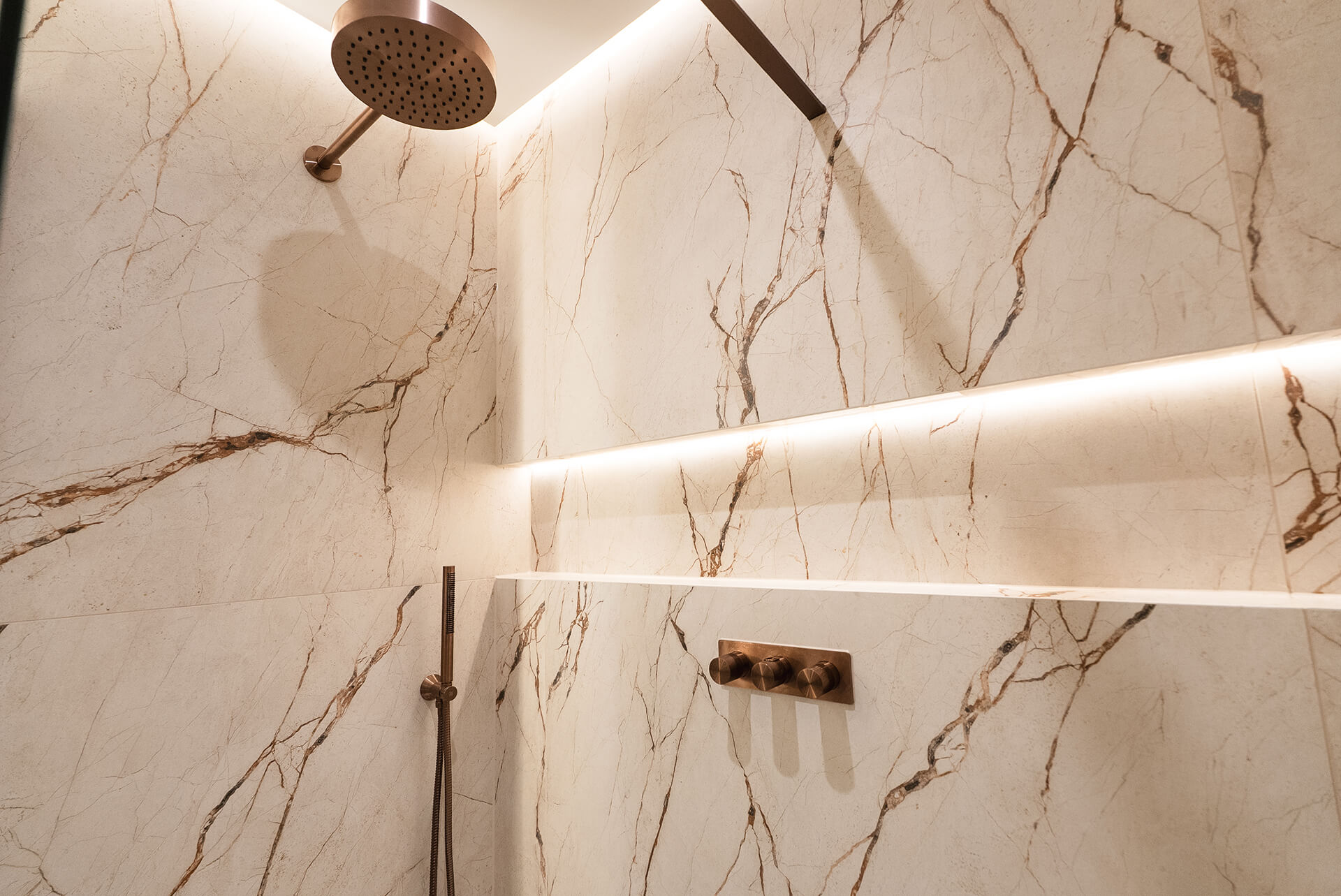
LED Lighting
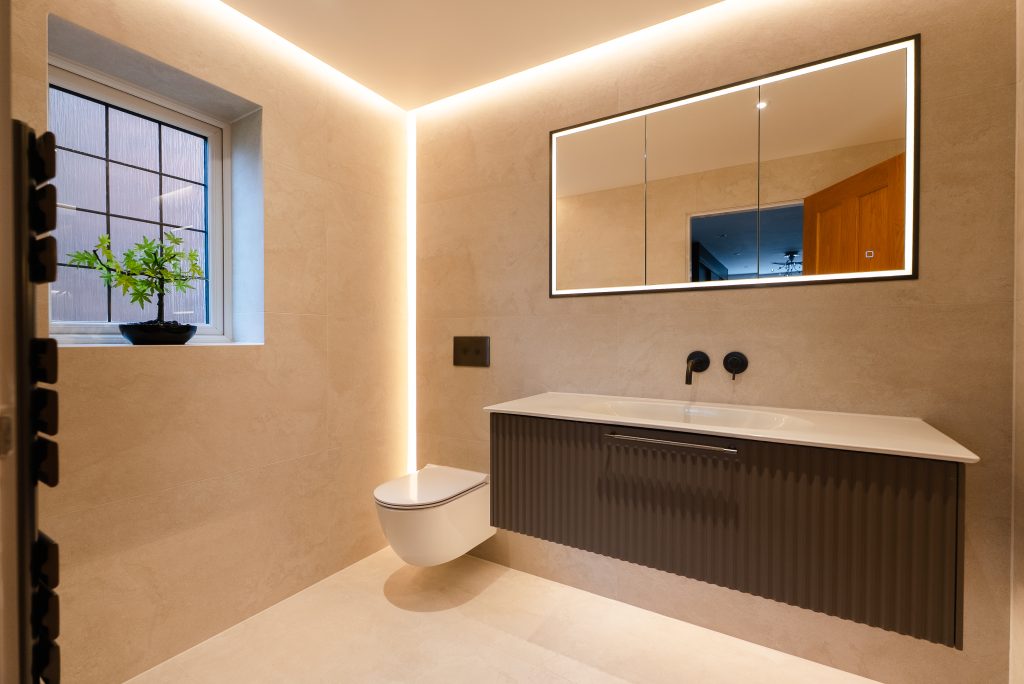
LED lighting plays a central role in modern bathroom design, balancing atmosphere, practicality, and energy efficiency. Lighting is no longer an afterthought—it’s an integral design feature that enhances both the look and usability of the space.
- Layered LED lighting allows bathrooms to adapt to different needs throughout the day. Recessed ceiling lights provide general illumination, while LED strips under vanities, within niches, and along bath panels add depth and a soft ambient glow. Task lighting around mirrors ensures clear, shadow-free visibility for grooming and daily routines.
- Energy efficiency and longevity are key advantages of LED technology. LEDs consume significantly less energy than traditional lighting and have a long lifespan, making them a cost-effective and sustainable choice for bathrooms where lights are used frequently.
- Smart and adjustable options are increasingly popular in 2026, with dimmable LEDs, colour temperature control, and motion-activated lighting offering greater comfort and personalisation. Warm tones create a relaxing, spa-like feel, while cooler light supports precision tasks.
Tiling Trims & Mitre Edges
When it comes to modern bathroom design, the way tiles finish at edges and corners is just as important as the tiles themselves. Two of the most popular finishing options in 2026 are tiling trims and mitred edges, each offering distinct aesthetic and practical benefits.
- Tiling trims are slim metal or PVC profiles installed along tile edges. They provide a clean, defined finish while protecting tile edges from chipping and wear—particularly important in high-moisture areas like showers and bath surrounds. Available in a wide range of finishes such as brushed brass, matt black, chrome, and white, trims can either subtly blend in or become a design feature that complements taps, shower frames, and accessories.
- Mitred edges, on the other hand, involve cutting tiles at a 45-degree angle so they meet seamlessly at corners without a visible trim. This creates a smooth, continuous look that highlights the tile itself rather than the edge detail. Mitred finishes are often associated with high-end, minimalist bathrooms and work especially well with large-format tiles, stone, and porcelain slabs.
In summary:
- Choose tiling trims for durability, easier installation, and a crisp, architectural finish with design flexibility.
- Opt for mitred edges for a refined, luxury aesthetic where clean lines and seamless surfaces take centre stage.
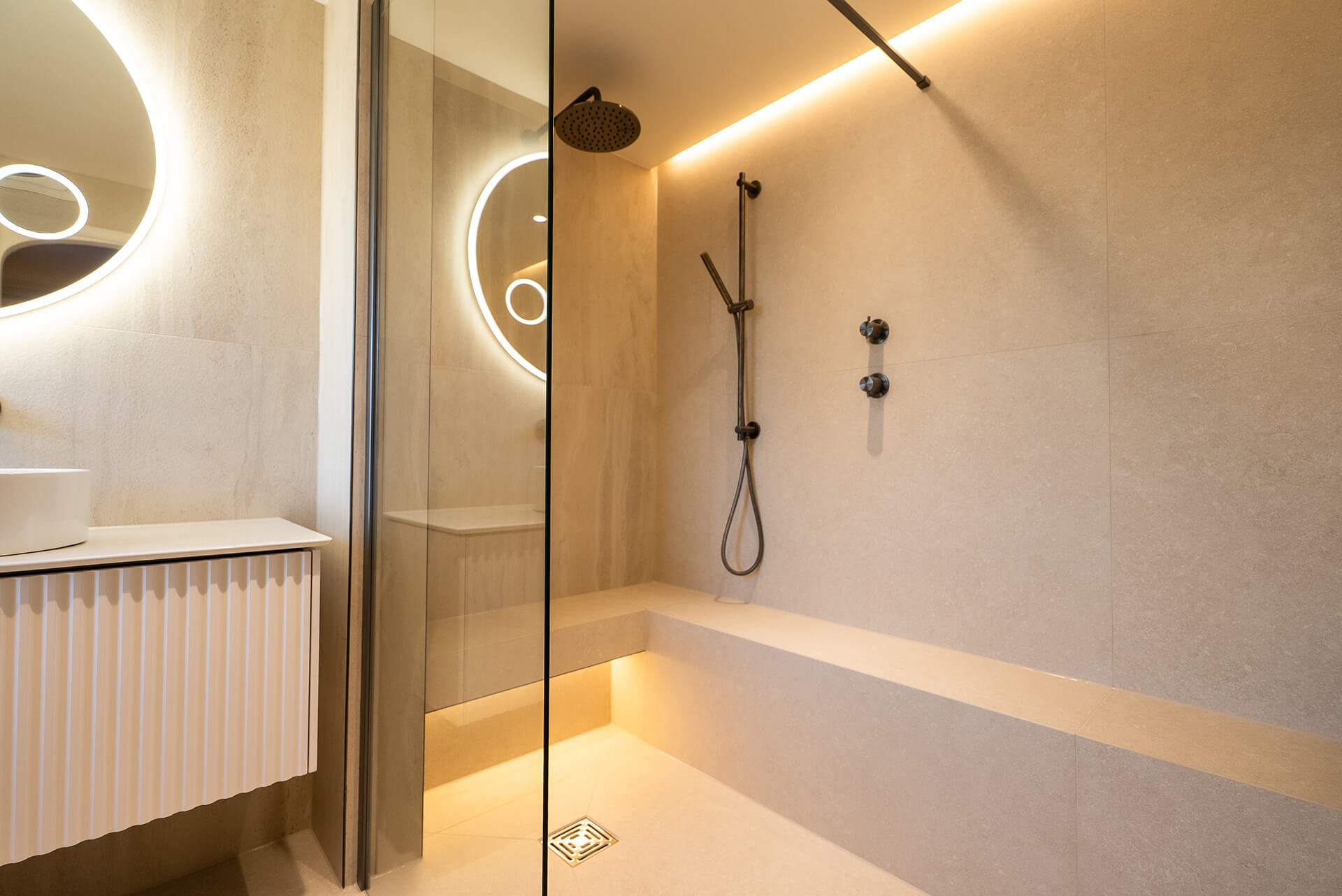
PVD Finishes
A PVD (Physical Vapour Deposition) finish is an advanced coating technology increasingly used in high-end bathroom fittings and accessories. In 2026, PVD finishes are a key trend thanks to their durability, refined appearance, and ability to maintain colour over time in demanding bathroom environments.
Unlike traditional electroplating, PVD involves bonding a microscopic layer of metal to the surface in a vacuum process. This creates an exceptionally hard, dense finish that is highly resistant to scratches, corrosion, tarnishing, and fading—ideal for taps, shower fittings, towel rails, and trims exposed to constant moisture and daily use.
From a design perspective, PVD finishes offer rich, consistent tones such as brushed brass, champagne gold, gunmetal, and matt black. These colours retain their depth and clarity far longer than standard finishes, making them a popular choice for both minimalist and luxury bathroom schemes.
In summary:
- PVD finishes provide superior durability and long-lasting colour compared to traditional coatings.
- They offer a premium look with minimal maintenance, perfect for modern bathrooms.
As homeowners in 2026 prioritise longevity alongside style, PVD finishes stand out as a smart investment that combines cutting-edge technology with timeless appeal.
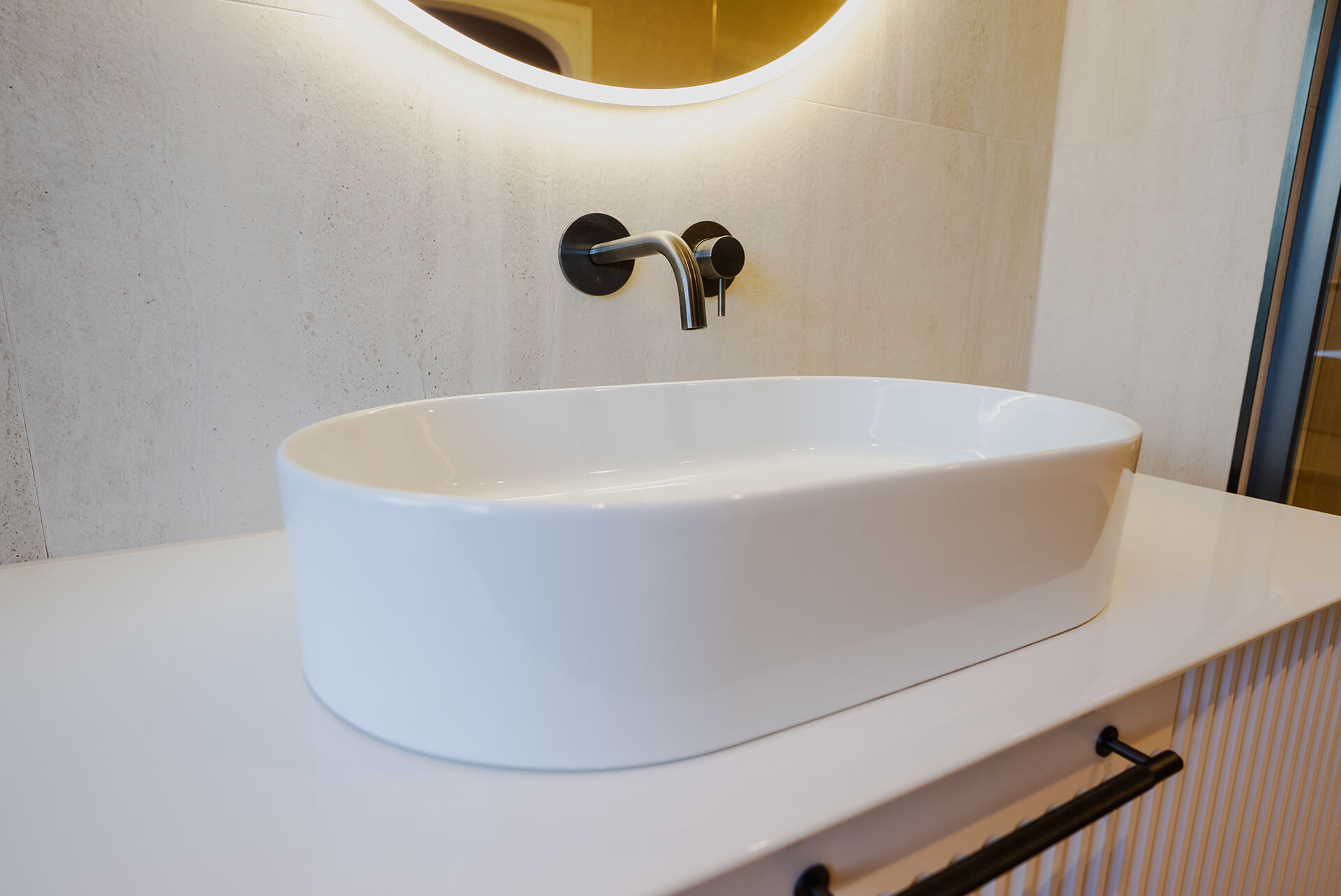
Smart Features
Smart technology continues to redefine bathroom design in 2026, transforming everyday routines into more comfortable, efficient, and personalised experiences. From invisible comfort upgrades to intelligent water management, smart features are now as much about sustainability as they are about luxury.
- Heated floors provide consistent, radiant warmth underfoot, eliminating cold tiles and reducing the need for traditional heating. Popular with tiled and stone bathrooms, underfloor heating delivers energy-efficient comfort while keeping walls clear for a clean, minimalist layout.
- Smart mirrors combine sleek design with integrated technology such as LED lighting, demisting, touch or motion controls, Bluetooth connectivity, and even voice assistance. They enhance daily grooming while maintaining a streamlined, clutter-free aesthetic—perfect for modern bathrooms where function and form must work seamlessly together.
- Water-saving technology is a major focus for 2026, with intelligent taps, showers, and toilets designed to reduce consumption without compromising performance. Features like flow regulators, aerated sprays, sensor activation, and real-time usage feedback help homeowners lower water bills and environmental impact while still enjoying a premium experience.
In summary:
- Heated floors add discreet, energy-efficient comfort
- Smart mirrors elevate convenience and visual appeal.
- Water-saving tech supports sustainability without sacrificing luxury.
Sustainable Materials
Sustainability is no longer a niche consideration—it’s a defining element of bathroom design in 2026. Homeowners are increasingly choosing materials that reduce environmental impact while still delivering durability, performance, and refined aesthetics.
- Recycled and reclaimed materials are being used across tiles, vanity units, and worktops, offering unique textures and character while reducing waste. Recycled glass tiles, reconstituted stone, and reclaimed wood (specially treated for moisture resistance) bring depth and individuality to bathroom spaces.
- Low-impact natural materials such as responsibly sourced timber, bamboo, clay, and natural stone are also gaining popularity. These materials provide warmth and tactility, helping to soften contemporary bathrooms and create a calm, spa-like atmosphere when paired with modern fittings.
- Eco-friendly surfaces and finishes include tiles with lower embodied carbon, water-based sealants, and long-lasting finishes like PVD coatings that extend product life and reduce the need for replacement. Durability plays a key role in sustainability—materials that last longer ultimately create less waste.
Ready to bring these 2026 bathroom trends into your own home?
Visit our showroom or speak with our team to start designing a space that’s tailored to your style, built to last, and finished to the highest standard.